


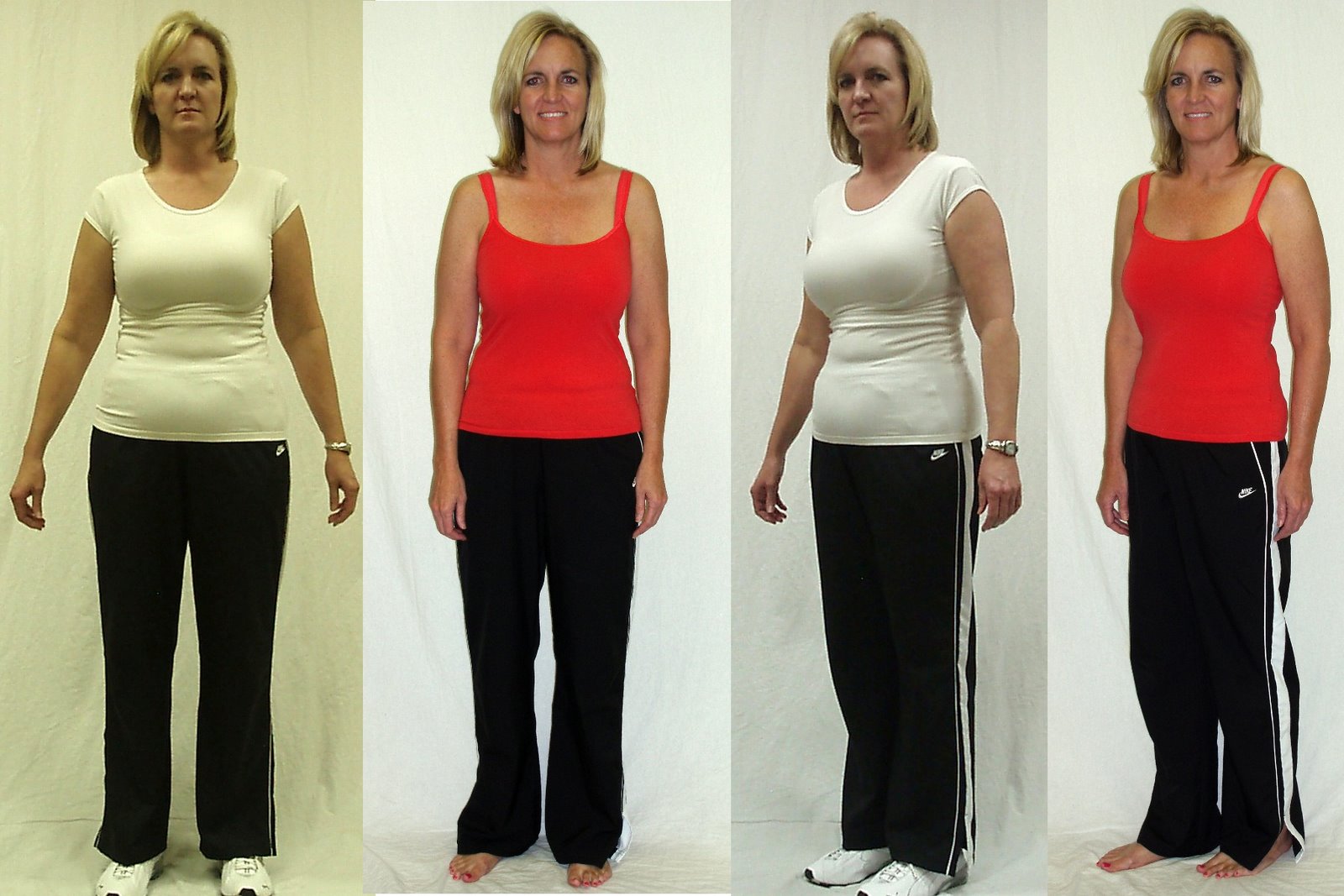


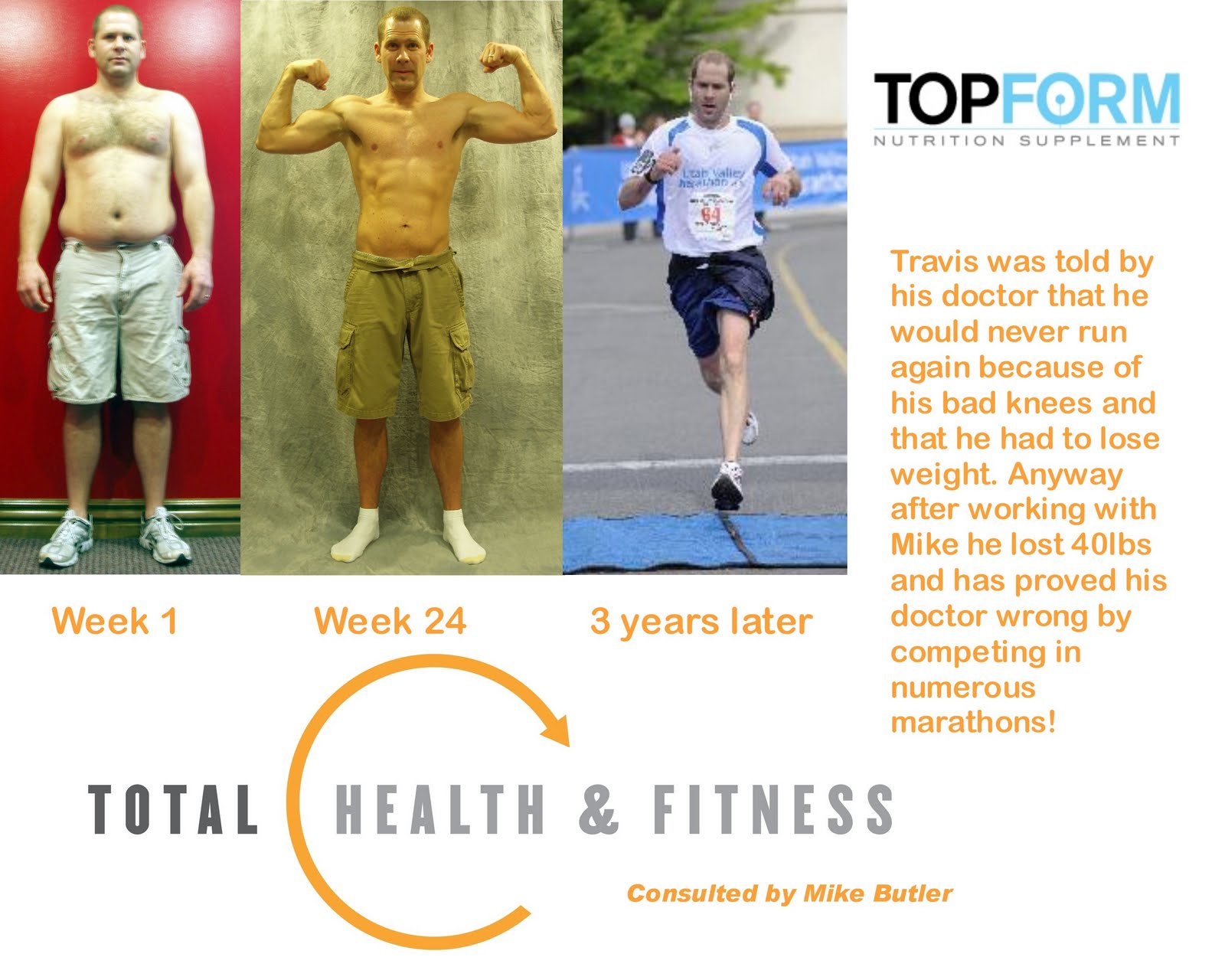


 Great Job to my client Shane. He lost 55lbs fat, gained 5lbs muscle and lost 20% bodyfat!

How to Slow Down the Aging Process
The Fountain of Youth is a popular legend that still lives on since Ponce de Leon allegedly scoured Florida in 1513 to find it. The idea that a magical spring can reverse the process of aging is one that still intrigues many people today. Although no one has yet discovered the Fountain of Youth or another way to reverse the process of aging, there are many ways that it can be slowed.
1. Limit Calories.
If you want to feel younger and healthier, it has been shown in documented scientific studies that calorie restrictions will do just that. If you simply limit the number of calories you consume in a day, studies show that you will live longer. Of course the key to successful calorie reductions is to limit the foods that you eat to those that are full of nutrients. Try to reduce daily calories by 25%, this is a great place to start.
2. Connect with People
The healthiest and longest lived people are statistically shown to be those with many connections to people and things outside themselves. Research has shown that people with few connections outside themselves are typically in poorer mental health, poor physical health, and often die prematurely. Take time to connect with those around you and to develop hobbies that you have always wanted to pursue.
3. Exercise Regularly
This is a huge benefit both to body and mind. Studies have shown that exercise is as effective in combating depression as an anti-depressant. It keeps muscles toned, strengthens bones, increases circulation, lowers blood pressure, and improves blood sugar management. It keeps oxygen flowing to the brain and improves its function. You should try to always include both cardiovascular exercise and weight training.
4. Focus your Mind
Never underestimate the incredible power of your mind. In a recent breakthrough scientific study, painstaking effort went into reconstructing a complete environment that made elderly test subjects feel like they were living in the 1980s. They were carefully monitored and compared to other elderly test subjects who were observed in the present day surroundings. It was shown that those who were surrounded by reminders of the 1980s behaved like they were 20 years younger. They were physically capable of doing things that they could do 20 years ago, all because their mind responded to visible cues in their surroundings!
5. Be Wise With Your Diet
It is important to know what foods will help your body to be strong and healthy. Eat plenty of fresh fruits and vegetables, low fat dairy, whole grains, and lean meat for protein. Another excellent source of protein to help you feel much younger is whey protein. This is an all-natural protein source that comes from dairy and it is best taken as a supplement. It is highly recommended by health professionals because it helps your body generate lean muscle. This is very important if you want your body to respond to your youthful and vibrant mind. Make sure to get whey protein isolate, this supplement contains 90% protein and is the most cost-effective way to make sure you are getting enough protein every day.
For more info on whey protein, visit Top Form Supplements.


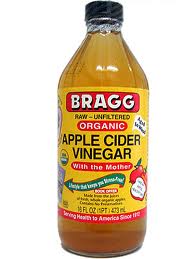
Scientific Evidence of Apple Cider Vinegar Benefits
Does Apple cider vinegar work?
There are some medical uses of vinegar that do have promise, at least according to a few studies. Here's a rundown of some more recent ones.
* Diabetes. The effect of vinegar on blood sugar levels is perhaps the best-researched and the most promising of apple cider vinegar's possible health benefits. Several studies have found that vinegar may help lower glucose levels. For instance, one 2007 study of 11 people with type 2 diabetes found that taking two tablespoons of apple cider vinegar before bed lowered glucose levels in the morning by 4%-6%. (Lower blood sugar works better on a diet)
* High cholesterol . A 2006 study showed evidence that vinegar could lower cholesterol. However, the study was done in rats, so it's too early to know how it might work in people.
* Blood pressure and heart health. Another study in rats found that vinegar could lower high blood pressure. A large observational study also found that people who ate oil and vinegar dressing on salads five to six times a week had lower rates of heart disease than people who didn't. However, it's far from clear that the vinegar was the reason.
* Cancer . A few laboratory studies have found that vinegar may be able to kill cancer cells or slow their growth. Observational studies of people have been confusing. One found that eating vinegar was associated with a decreased risk of esophageal cancer. Another associated it with an increased risk of bladder cancer.
* Weight Loss . For thousands of years, vinegar has been used for weight loss. White vinegar (and perhaps other types) might help people feel full. A 2005 study of 12 people found that those who ate a piece of bread along with small amounts of white vinegar felt fuller and more satisfied than those who just ate the bread.
While the results of these studies are promising, they are all preliminary. Many were done on animals or on cells in a lab. The human studies have been small. Before we will truly know whether vinegar has any health benefits, much larger studies are needed.


We’re using resistance training as the cornerstone of our fat loss programming. Our goal is to work every muscle group hard, frequently, and with intensity that creates a massive “metabolic disturbance” or ”afterburn,” leaving the metabolism elevated for several hours post workout. Here are a few studies to support this:
Schuenke MD, Mikat RP, McBride JM. Effect of an acute period of resistance exercise on excess post-exercise oxygen consumption: implications for body mass management.
European Journal of Applied Physiology. March 2002, Vol 86 (5): 411-7. Epub 2002 Jan 29.
This study used a circuit training protocol of 12 sets in 31 minutes. EPOC was elevated significantly for 38 hours post workout, which is a pretty significant timeframe for metabolism to be elevated. If you trained from 9 to 10 a.m. on Monday morning, you’re still burning more calories (without training) at midnight on Tuesday! Can we compound this with additional training within that 38 hours? No research has been done, but I have enough case studies to believe that you can.
Another study: Kramer, Volek et al. Influence of exercise training on physiological and performance changes with weight loss in men. Medicine & Science in Sports & Exercise, 1999, Vol. 31, No. 9: 1320-1329
Overweight subjects were assigned to three groups: Diet-only, diet plus aerobics, diet plus aerobics plus weights. The diet group lost 14.6 pounds of fat in 12 weeks. The aerobic group lost only one more pound (15.6 pounds) than the diet group (training was three times a week starting at 30 minutes and progressing to 50 minutes over the 12 weeks). Now, the weight training group lost 21.1 pounds of fat (44% and 35% more than diet- and aerobics-only groups respectively). The addition of aerobic training didn’t result in any real worldsignificant fat loss over dieting alone. Thirtysix sessions of up to 50 minutes is a lot of work for one additional pound of fat loss. However, the addition of resistance training greatly accelerated fat loss results.
One more: Bryner RW, Ullrich IH, Sauers J, Donley D, Hornsby G, Kolar M, Yeater R. Effects of resistance vs. aerobic training combined with an 800-calorie liquid diet on lean body mass and resting metabolic rate. Journal of the American College of Nutrition, April 1999, 18 (2): 115-21.
The aerobic group performed four hours of aerobics per week. The resistance training group performed 2-4 sets of 8-15 reps, 10 exercises, three times per week. VO2 max increased equally in both groups. Both groups lost weight.
1) High Intensity Resistance Training
The resistance training group lost significantly more fat and didn’t lose any lean body mass, even at only 800 calories per day. The reason the calories were so low was to really take any dietary variables completely out of the equation and compare the effects of the exercise regime on LBM and metabolism. The resistance training group actually increased metabolism compared to the aerobic group, which decreased metabolism. It seems that aerobic training is a more significant stress to the body than a starvation diet.
In my experience, full body training in a superset, tri-set, or circuit format (with non-competing exercises) in a rep range that generates lactic acid (and pushes the lactic acid threshold or LAT) seems to create the biggest metabolic demand. It makes sense; training legs, back, and chest will burn more calories and elevate metabolism more than an isolated approach training one of them. The rep range that seems to work best is the 8-12 hypertrophy range, although going higher will work just as well with a less-trained population.
2. High Intensity Anaerobic Interval Training
The second key “ingredient” in fat loss programming is high intensity interval training (HIIT). I think most readers are well aware of the benefits of interval work. It burns more calories than steady state and elevates metabolism significantly more than other forms of cardio. The only downside is that it flat-out sucks to do! Interval training works. Too bad it isn’t more fun to perform!
The landmark study in interval training was from Tremblay: Tremblay A, Simoneau JA, Bouchard C. Impact of exercise intensity on body fatness and skeletal muscle metabolism. Metabolism, July 1994, 43 (7): 814-8
This study pitted 20 weeks of endurance training against 15 weeks of interval training:
• Energy cost of endurance training = 28,661 calories.
• Energy cost of interval training = 13,614 calories (less than half)
The interval training group showed a nine times greater loss in subcutaneous fat than the endurance group (when corrected for energy cost). Read that again. Calorie for calorie, the interval training group lost nine times more fat overall. Why? Maybe it’s EPOC, an up-regulation of fat burning enzyme activity, or straight up G-Flux. I don’t care. I’m a real world guy. If the interval training group had lost the same amount of fat as the endurance group, we’d get the same results in less time. That means interval training is a better tool in your fat loss arsenal.
3. High Intensity Aerobic Interval Training
The next tool we’ll pull out is essentially a lower intensity interval method where we use aerobic intervals. Here’s the study we’ll be referring to: Talanian, Galloway et al. Two weeks of High-Intensity Aerobic Interval Training increases the capacity for fat oxidation during exercise in women. Journal of Applied Physiology, April 2007, 102 (4):1439-47. Epub 2006 Dec 14.
This study looked at high-intensity aerobic interval training and its influence on fat oxidation. In summary, seven sessions of HIIT over two weeks induced marked increases in whole body and skeletal muscle capacity for fatty acid oxidation during exercise in moderately active women. In layman’s terms, the interval work appeared to “up-regulate” fat burning enzymes. This means we can burn more fat in other activities as a result of this inclusion. In other words, we get a bit more bang for our buck.
A quick disclaimer, though: My colleague Alan Aragon once said, “Caring about how much fat is burned during exercise is equivalent to worrying about how much muscle is built during exercise.” In other words, substrate utilization during exercise isn’t really an important variable in the big picture of fat loss. Total calories burned overall is.
4. Steady State High Intensity Aerobic Training
Tool number four is just hard cardio work. This time we’re burning calories. We aren’t working hard enough to increase EPOC significantly or to do anything beyond the session itself. But calories do count. Burning another 300 or so calories per day will add up.
5. Steady State Low Intensity Aerobic Training
This is just random activity, such as going for a walk in the park. It won’t burn a lot of calories or increase muscle or EPOC. There isn’t very much research showing that low intensity aerobic training actually results in very much additional fat loss, but you’re gonna have to really work to convince me that moving more is going to hurt you when you’re in fat attack mode.
Just a reminder... I will be designating 15 or so hours a week at a local personal training center running boot camps, group training, and personal training. I love it and it will be great for clients of Total Health & Fitness. Email me if you are interested. mike.butler@thfonline.com


